
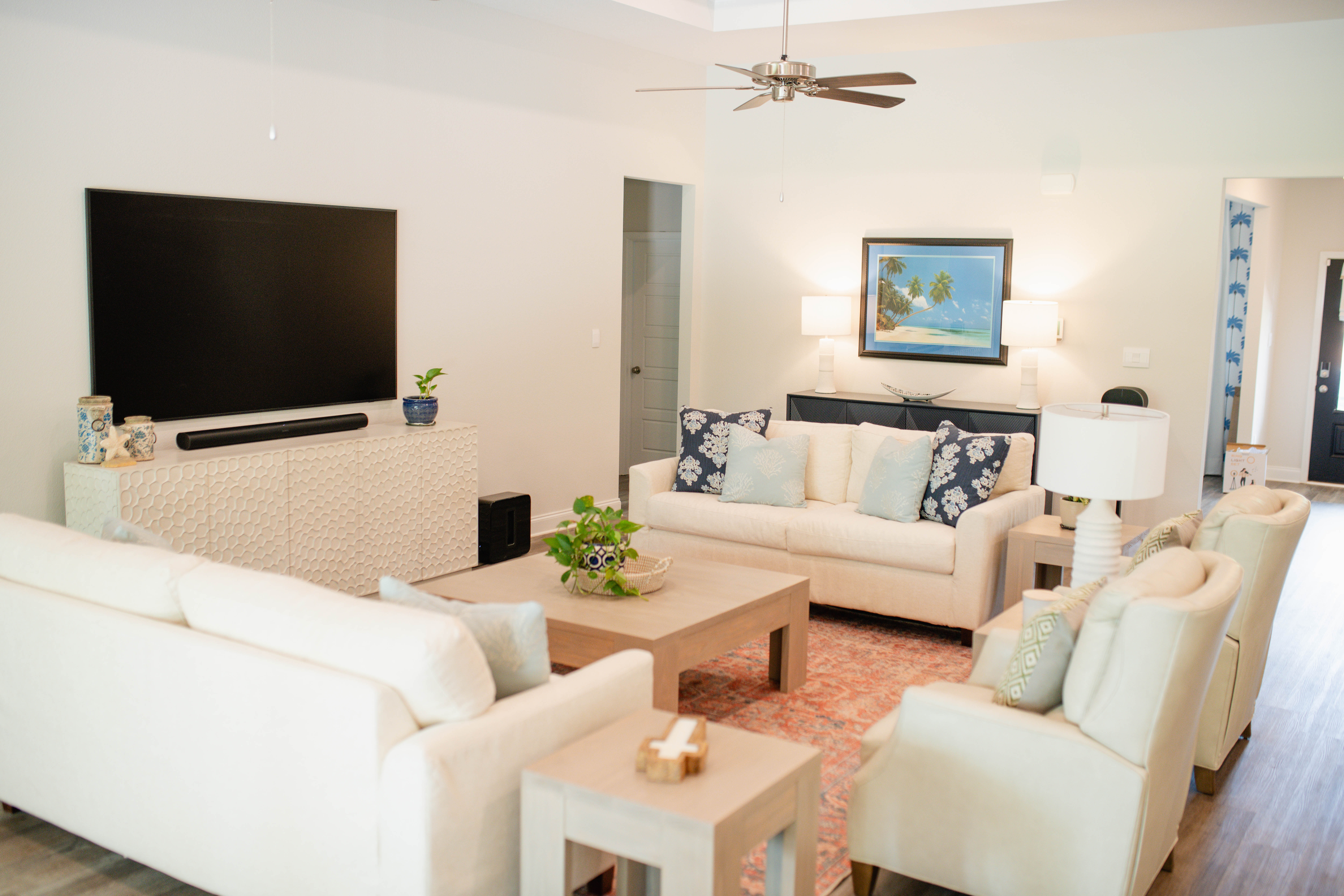
It's easy to start shopping when you're planning a renovation, building a home, or simply ready for a change.
You find a sofa you love. Then a light fixture. Then some beautiful tile. Before you know it, you've got a collection of screenshots, saved Instagram posts, and online shopping carts—and no idea if any of it actually belongs together.
I've been there. And I've seen it happen with clients, too.
The problem usually isn't that someone has bad taste.
It's that they're making individual decisions before they have a plan for the space as a whole.
Before you start buying, here are seven decisions I recommend making first.

Start with your life—not Pinterest.
Who uses the room? How do you move through it? Do you entertain often? Do you need room for children, pets, overnight guests, or all of the above?
A beautiful room that doesn't function for the people living in it isn't a successful design.
For example, the best furniture arrangement isn't necessarily the one that looks best in a photograph. It's the one that allows you to walk through the room comfortably, have a conversation, watch TV, entertain guests, or whatever it is you actually want to do there.
Function should come before furniture.
This is one of the biggest reasons I recommend planning before shopping.
Furniture has scale. Rooms have limitations. Doors swing. Windows take up wall space. Walkways need room. And that gorgeous oversized sectional may not be quite as gorgeous when you realize it blocks the path into the kitchen.
Before purchasing anything, determine:
Sometimes the best design decision isn't choosing a different sofa.
It's changing the layout.
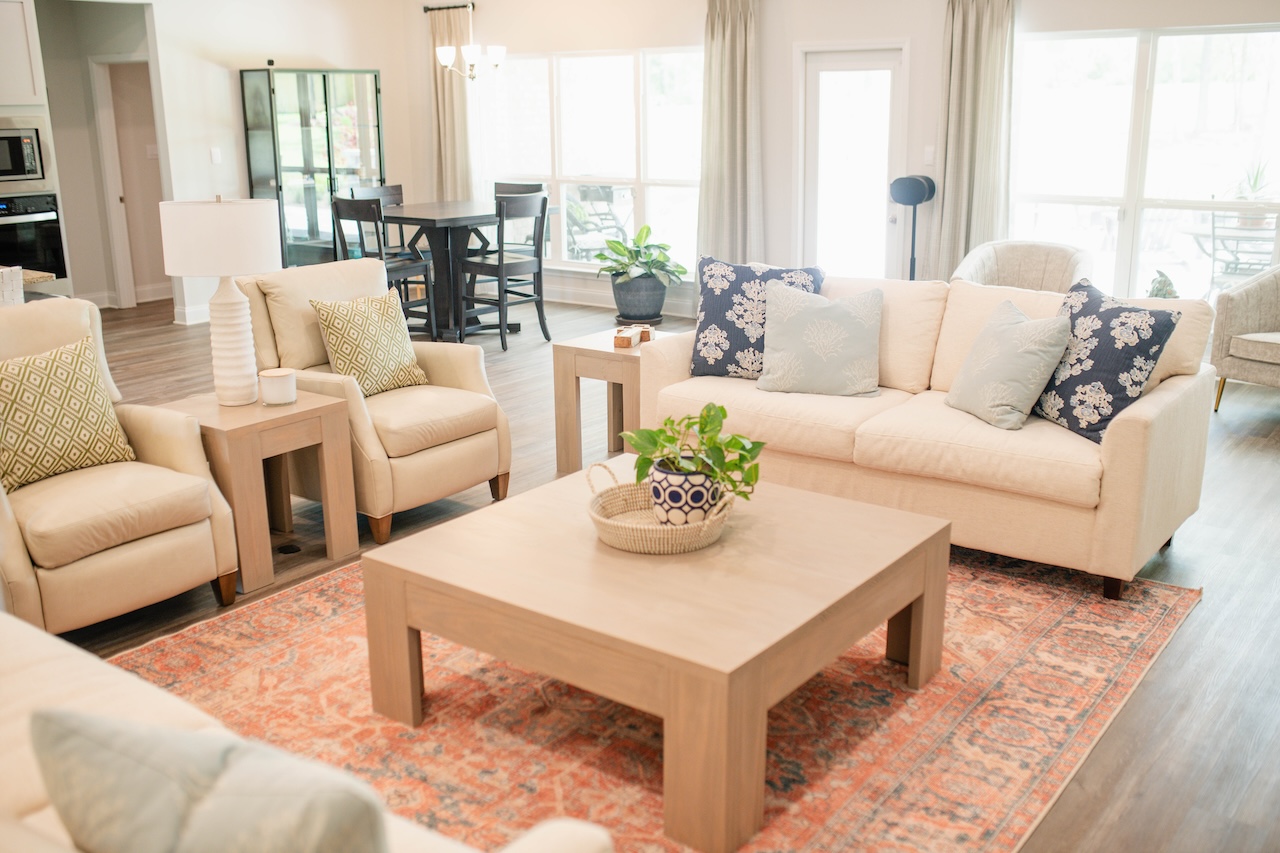
Not everything in a room can be the star.
Ask yourself:
What matters most to me in this space?
Maybe it's a kitchen that finally has enough storage. Maybe it's a comfortable living room where the entire family can hang out. Maybe it's a bedroom that feels like a retreat at the end of a long day.
Knowing your priorities makes the rest of the decisions easier.
It also helps you decide where to spend your money.
This doesn't mean you need to choose a specific “style” and then buy everything that fits into that category.
I actually prefer starting with something you genuinely love—a piece of furniture, a piece of art, a material, a color—and using that as a starting point.
From there, you can build a combination of finishes, furniture, textures, patterns and colors that feels intentional and personal.
The goal isn't for every room to look like it belongs in the same showroom.
The goal is for your home to feel like it belongs to you.
Please don't skip this one.
Measure the room. Measure the walls. Measure doorways and hallways. Pay attention to ceiling height, windows, outlets and other architectural details.
And remember that the measurements that matter aren't just the room dimensions.
A piece of furniture may technically fit in the room but still be too large for the space—or impossible to get through the front door.
I've learned that it's much easier to spend a few minutes measuring than to figure out what you're going to do with a sofa that doesn't fit.

This is another place where having a plan can save you money.
You don't necessarily need to know the exact cost of every item before you begin, but you should have a realistic overall budget and an idea of where you want to spend it.
If you spend most of your budget on one beautiful piece at the beginning, you may find yourself making compromises later on things that are just as important.
A good plan helps you prioritize.
It also helps you recognize when something is worth the investment—and when a less expensive option makes more sense.
Now you're ready.
Once you understand how the room needs to function, how the space will be laid out, what matters most, what you want the overall design to feel like, and what your budget looks like, shopping becomes much easier.
Instead of asking:
“Do I like this?”
You can ask:
“Does this make sense for my home?”
That question can save you from a lot of expensive mistakes.
Whether you're building a new home, renovating an existing one, or simply trying to make a room work better, the decisions you make at the beginning can affect everything that comes after them.
That's why I believe good design isn't about filling a room with beautiful things.
It's about creating a plan that considers how you live, how the space functions, and what you want your home to feel like—and then making thoughtful selections from there.
If you're planning a project and aren't sure where to begin, that's exactly the kind of conversation I love having with homeowners.
Beautiful homes get your attention. Functional homes keep it.
If you're ready to talk about your project, contact me.
.png)
